



How to get a Halal Certification
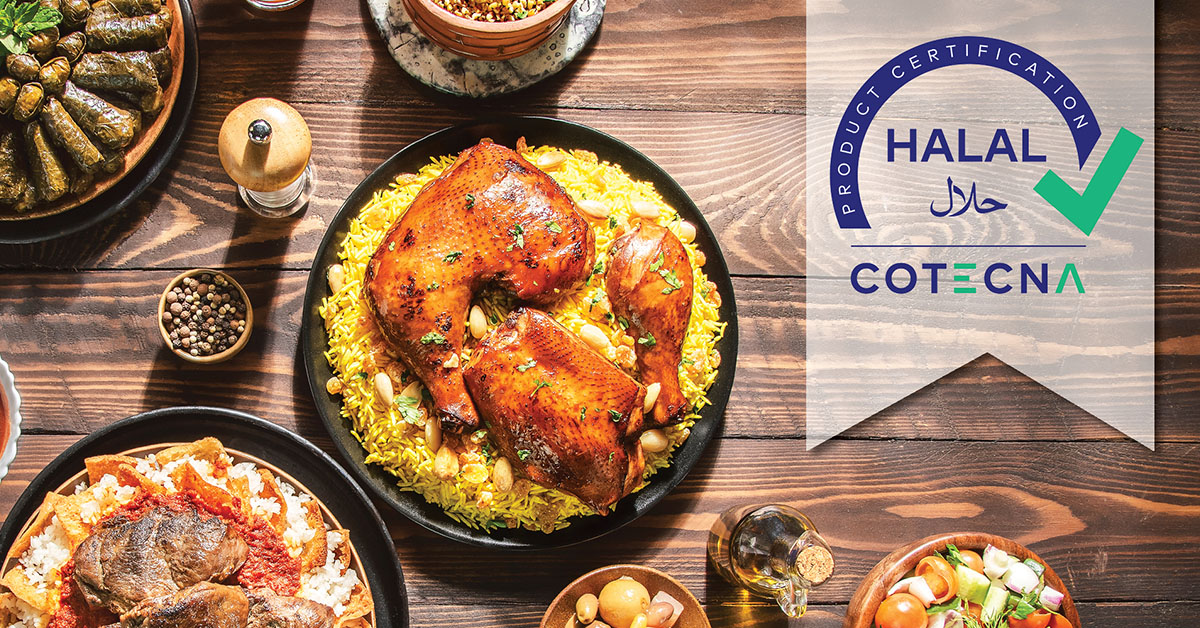
For a Muslim consumer, Halal products are more than a preference. It is a religious obligation for Muslims to only consume halal products. While products like fruits, nuts and vegetables tend to be inherently halal, meat products are not. Also, non-food products like cosmetics can also be halal or haram (forbidden). Halal Certification ensures that regulated products comply with Islamic laws and standards. These products follow specific rules for production, slaughter and other quality standards set by Islamic Sharia.
Importance of Halal Certification
Halal Certification includes the testing and inspection of products, quality management systems, manufacturing process, and factories to determine compliance. To be considered Halal, a product needs to meet 2 criteria. One, is to meet the requirements of Islamic law and the other is to meet food safety requirements and regulations. A product cannot be called Halal if it is not safe for consumption or could harm the consumer.
What’s the potential of Halal Certification?
The halal market currently consists of 1.9 billion Muslims and is worth over $1.27 trillion as of 2021. Beyond that, halal-certified products are not only used by Muslim consumers but by anyone who prefers the benefit of additional safety and Islamic criteria.
The following halal sectors have gained importance recently
- Food - ingredients, additives, meat and poultry products
- Slaughterhouses for halal meat and poultry supply
- Cosmetics and Perfumes
Halal slaughter is also praised for its dignified treatment of animals.
Benefits of halal certification
A lot of products claim to be ‘halal’ without any way to verify such claims. Halal certification from authorized/recognized channels gives confidence to consumers and ensures traceability for any validation of the claims.
The benefits of halal certification include:
- Traceability
- Boosts consumer confidence
- Accredited and notified certification
- Helps market the product in distinct markets
- Provides a key selling proposition
Halal certification requirements
Halal certification requirements are as follows:
- Meet food safety requirements as per Codex or FSMS standards
- Ingredients traceability and data for source identification
- Raw material/end product test report
- Onsite audit for witness production
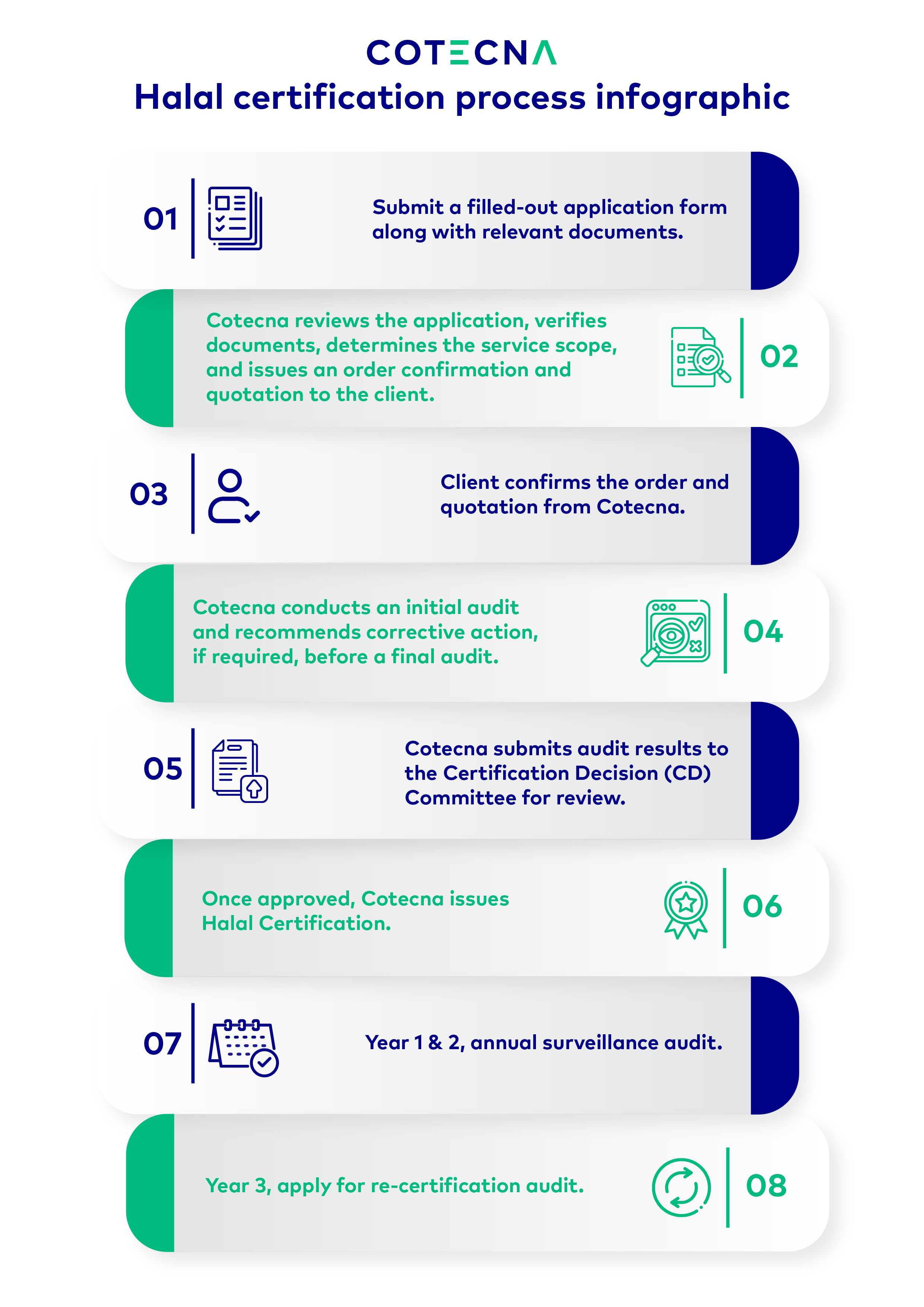
The halal certification process
Why Cotecna
Cotecna is a leading global provider of testing, inspection and certification services. Founded as a family business in Switzerland in 1974, Cotecna now has over 140 offices and laboratories in over 50 countries. With almost 50 years of experience, Cotecna can provide you with the following halal services:
- Facility certification
- Shipment and/or product certification
- Training on GSO Halal Standards
- Slaughterhouse certification
To learn more about Halal Certification or to request for a free quote, please contact us.
About Cotecna
For over 50 years, we have been supporting agriculture, food and pharma, minerals and metals, and consumer products supply chains all over the world. We provide testing, inspection, and certification services to help our clients navigate evolving regulations, ensure product compliance, and support their sustainability journey.
Latest News

30.10.2026
Beyond Carbon Footprint: A Practical Guide to More Sustainable Businesses
Explore how GHG inventories, emissions verification, Life Cycle Assessment, energy management and ESG assurance support credible business sustainability.
30.10.2026
Strengthening Cotecna's Global Metals & Minerals Network Through Leadership Engagement
Mark Houchin's global visits highlight Cotecna's commitment to technical excellence and operational alignment, while focussing on strong customer partnerships worldwide.