



Carbon, Capital and Impact: Strengthening Trust Through Verification, Due Diligence and Risk Management
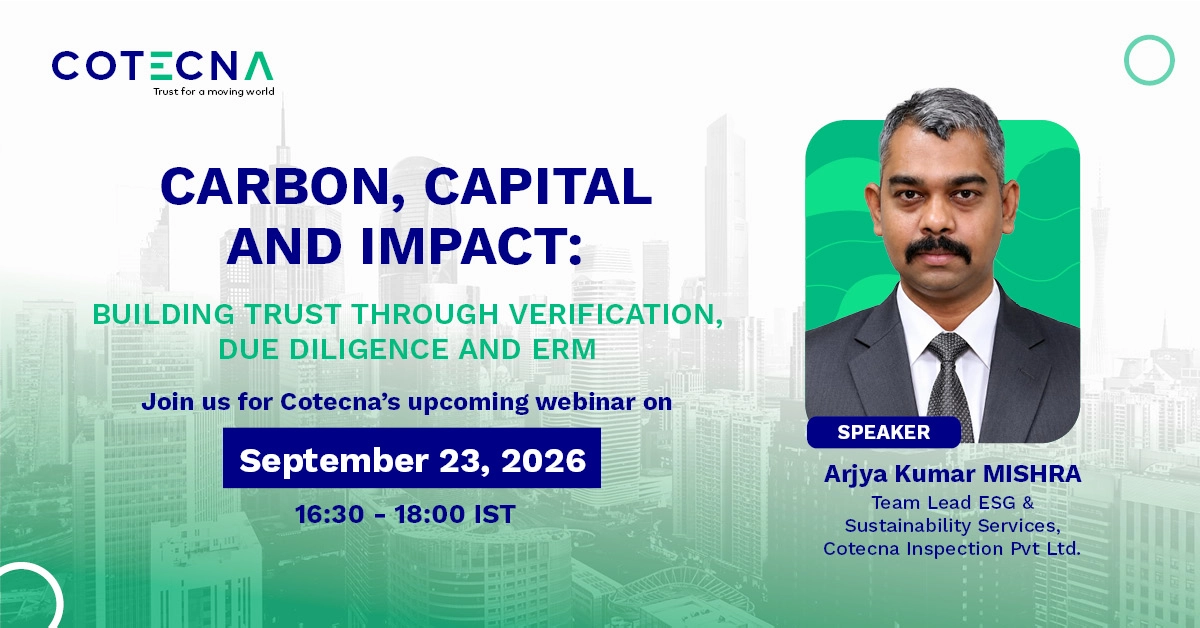
Businesses are facing growing expectations from regulators, investors, customers and other stakeholders to show that their sustainability commitments are more than statements on paper. They need reliable data, sound governance, and evidence that their environmental and social claims are delivering real results.
This is where carbon integrity, climate finance, supplier due diligence, and Enterprise Risk Management (ERM) come together.
Recent discussions among industry experts have highlighted the importance of looking at these areas as connected parts of a broader approach to sustainability and business resilience.
The Growing Importance of Carbon Integrity
Carbon markets are evolving quickly, creating opportunities for organizations to support climate action while progressing toward their sustainability goals. At the same time, greater attention is being placed on the credibility of the projects and claims behind carbon initiatives.
For businesses, this means being able to demonstrate that carbon credits and environmental claims are based on measurable results and reliable data.
Independent verification can play an important role in this process. It provides greater transparency around project performance, helps strengthen accountability, and gives stakeholders greater confidence in the information being presented.
It can also help organizations identify potential risks before they develop into larger reputational, operational, or regulatory issues.
Climate Finance Must Deliver More Than Emissions Reductions
Climate finance is also being viewed through a broader lens.
Reducing emissions remains important, but investors and other stakeholders are increasingly interested in the wider environmental and social value created by sustainability projects. This includes understanding how projects affect local communities and whether promised benefits are being delivered.
Community engagement, livelihood opportunities, transparent governance, and ongoing impact monitoring can all contribute to stronger project outcomes.
Building these considerations into project planning and implementation can help organizations make their sustainability investments more meaningful, measurable, and credible.
Supplier Due Diligence Remains Critical
For many businesses, ESG risks do not stop at their own operations. They extend across suppliers, contractors, and other partners throughout the value chain.
This makes supplier due diligence an increasingly important part of responsible business management.
A structured approach can help organizations identify environmental, social, governance and traceability risks, while giving them a clearer view of where potential issues exist within their supply chains.
Due diligence should also be an ongoing process. Regular monitoring, clear corrective actions, and continued engagement with suppliers can help organizations address risks before they affect compliance, stakeholder trust, or broader sustainability commitments.
Bringing ESG Risks Into Enterprise Risk Management
Another important shift is the move away from treating sustainability as a separate reporting exercise.
Organizations are increasingly incorporating ESG and climate-related considerations into their broader Enterprise Risk Management frameworks. This allows sustainability-related risks to be considered alongside financial, operational, and strategic risks as part of everyday business decision-making.
Clear responsibilities, governance structures, and monitoring processes can help organizations better understand these risks and respond to them more effectively.
The result is a more connected approach to risk management, where sustainability considerations are part of building long-term business resilience.
A More Connected Approach to Carbon, Capital and Impact
Sustainability expectations will continue to evolve. For organizations, meeting those expectations requires more than setting ambitious targets.
It requires credible data, independent verification, effective due diligence, strong governance and a clear focus on measurable outcomes.
Connecting carbon integrity, climate finance, supplier oversight and enterprise risk management can help businesses build greater confidence in their sustainability programs while strengthening the foundations for long-term growth.
Ultimately, trust comes from being able to demonstrate what has been achieved, how it has been measured, and what is being done to manage the risks along the way.
Access the Recording and Presentation Materials
Want to explore these topics further?
Access the recording and presentation materials from our 23 September 2026 session to gain deeper insights into carbon integrity, climate finance, due diligence, and risk management through this link.
To learn more about Cotecna ESG Solutions, or to get a free quote, please contact us.
About Cotecna
For over 50 years, we have been supporting agriculture, food and pharma, minerals and metals, and consumer products supply chains all over the world. We provide testing, inspection, and certification services to help our clients navigate evolving regulations, ensure product compliance, and support their sustainability journey.
Latest News

30.10.2026
Beyond Carbon Footprint: A Practical Guide to More Sustainable Businesses
Explore how GHG inventories, emissions verification, Life Cycle Assessment, energy management and ESG assurance support credible business sustainability.
30.10.2026
Strengthening Cotecna's Global Metals & Minerals Network Through Leadership Engagement
Mark Houchin's global visits highlight Cotecna's commitment to technical excellence and operational alignment, while focussing on strong customer partnerships worldwide.