



ESG Audit & ISO Assurance: Driving Sustainable Compliance
Sustainability is no longer a side conversation. It is now directly linked to governance, risk management, capital access, customer confidence, supply-chain participation and long-term business resilience. As expectations rise, businesses increasingly use terms such as ESG audit, ESG assessment, ESG assurance, AA1000 assurance, value-chain assessment and ISO audit. However, these terms are often used interchangeably, creating confusion in strategy, reporting and stakeholder communication.
The distinction is important: an ISO audit checks system conformity, an ESG assessment examines ESG risks and performance, a value-chain assessment extends responsibility to suppliers and third parties, and ESG assurance tests whether reported ESG information can be trusted.
ISO Audit: Checking System Conformity
An ISO audit evaluates whether a management system conforms to a specific standard such as ISO 9001, ISO 14001, ISO 45001 or ISO 50001. It reviews policies, procedures, responsibilities, process controls, records, legal compliance mechanisms, internal audits, corrective actions and continual improvement.
The key question is: Are the systems conforming to the requirements of the standard?
The focus is system conformity, process discipline and operational control. ISO certifications are valuable because they create structure and accountability. However, ISO certification alone does not automatically prove ESG maturity. A company may have ISO 14001 certification and still have gaps in Scope 3 emissions, climate risk, biodiversity, supplier due diligence, stakeholder engagement or ESG disclosure quality.
ESG Audit or ESG Assessment: Looking at Risk, Performance and Preparedness
An ESG audit or ESG assessment takes a wider view. It examines how the organisation identifies, manages and improves its environmental, social and governance risks, practices and performance. It may review emissions, energy, water, waste, pollution prevention, climate readiness, occupational health and safety, labour practices, human rights, community impact, ethics, governance, stakeholder engagement and data systems.
The key question is: Are ESG risks, impacts and opportunities properly understood and managed?
The focus is risk, performance, maturity and improvement readiness. An ESG assessment helps management identify gaps, prepare for BRSR, GRI alignment, investor due diligence, ESG ratings and customer requirements. But it is not the same as ESG assurance. Assessment identifies gaps; assurance builds confidence in reported information.
Value-Chain ESG Assessment: Extending Responsibility Beyond the Organisation
ESG risk does not stop at the company gate. Many material risks are found across suppliers, contractors, outsourced agencies, logistics partners and other business relationships. A value-chain ESG assessment reviews whether third-party ESG risks are identified, monitored and controlled.
It may examine supplier policies, responsible procurement, contractor labour practices, human rights risks, environmental performance, logistics impacts, Scope 3 emissions, traceability, grievance mechanisms, supplier due diligence and corrective action systems. The focus is supply-chain resilience, responsible sourcing and third-party accountability.
ESG Assurance and AA1000: Building Trust in Reported Information
ESG assurance evaluates whether ESG information disclosed by an organisation is accurate, complete, balanced, consistent and supported by reliable evidence. It may apply to sustainability reports, BRSR disclosures, GRI reports, integrated reports, climate disclosures, carbon inventories or other public sustainability claims.
The key question is: Can stakeholders trust the ESG information being reported?
A proper assurance process may include review of reporting boundaries, testing of ESG data, validation of source documents, sampling, site-level evidence checks, interviews with data owners, calculation review and assessment of internal controls. ESG assurance is not merely a document review; it is an evidence-based process.
Frameworks such as AA1000 Assurance Standard add depth by focusing on inclusivity, materiality, responsiveness and impact. This helps organisations move beyond basic reporting towards stakeholder-oriented, credible and accountable sustainability disclosure.
The Difference in Simple Terms
|
Review Type |
Core Purpose |
|
ISO Audit |
System conformity and operational control |
|
ESG Assessment |
ESG risk, performance and improvement readiness |
|
Value-Chain Assessment |
Supplier, contractor and third-party ESG accountability |
|
ESG Assurance |
Credibility, reliability and trust in reported disclosures |
Why This Matters Now
Businesses are entering an era where sustainability claims will be tested more closely. Investors, lenders, regulators, customers and communities are asking whether ESG information is reliable, whether risks are managed, whether the value chain is responsible and whether actions match commitments.
At Cotecna Inspection India Pvt Ltd, we believe ESG must move from intention to implementation and from presentation to proof. Our approach supports organisations through ESG advisory, ESG assessments, value-chain assessments, BRSR readiness, sustainability reporting support, GRI alignment, AA1000 assurance, ESG assurance preparedness and management system audits.
The Way Forward
Organisations should treat ISO audits, ESG assessments, value-chain assessments and ESG assurance as different layers of a mature sustainability framework. First, build disciplined management systems. Then assess ESG risks and performance. Then evaluate value-chain exposure. Then assure what is disclosed.
The future of ESG will not be defined by who publishes the most attractive report. It will be defined by who can prove what they report.
ESG is not only about what is claimed. It is about what can be evidenced, assured and trusted.
About Cotecna
For over 50 years, we have been supporting agriculture, food and pharma, minerals and metals, and consumer products supply chains all over the world. We provide testing, inspection, and certification services to help our clients navigate evolving regulations, ensure product compliance, and support their sustainability journey.
Latest News

30.10.2026
Beyond Carbon Footprint: A Practical Guide to More Sustainable Businesses
Explore how GHG inventories, emissions verification, Life Cycle Assessment, energy management and ESG assurance support credible business sustainability.
30.10.2026
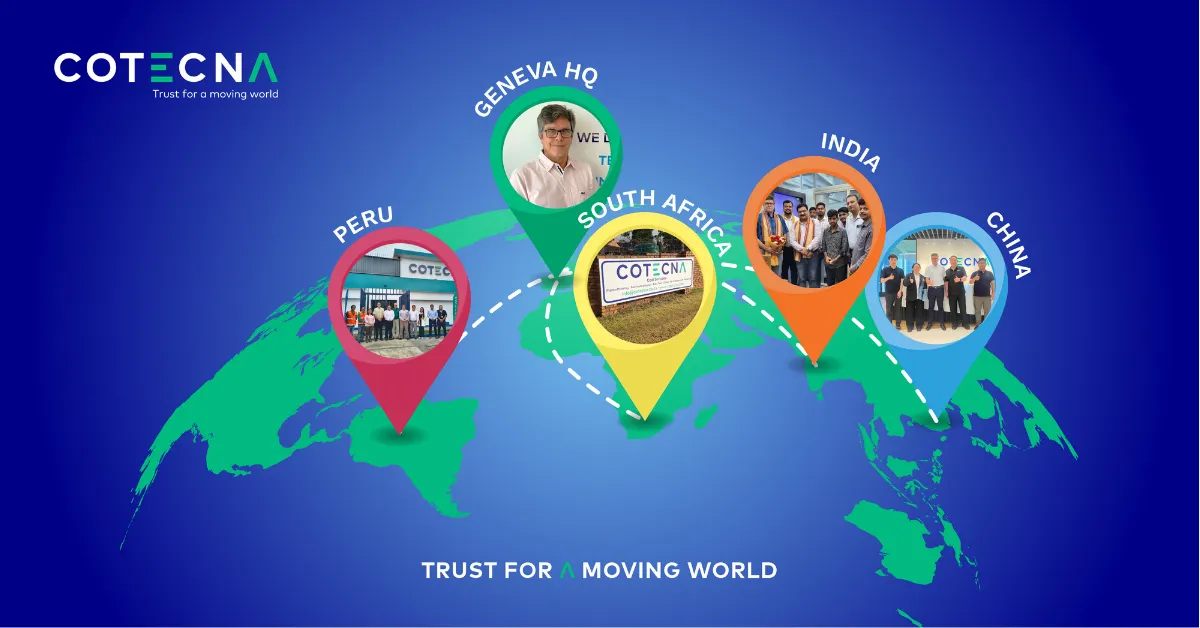
Strengthening Cotecna's Global Metals & Minerals Network Through Leadership Engagement
Mark Houchin's global visits highlight Cotecna's commitment to technical excellence and operational alignment, while focussing on strong customer partnerships worldwide.