



EU Commission Reaches Agreement to Loosen Rules on New GMOs
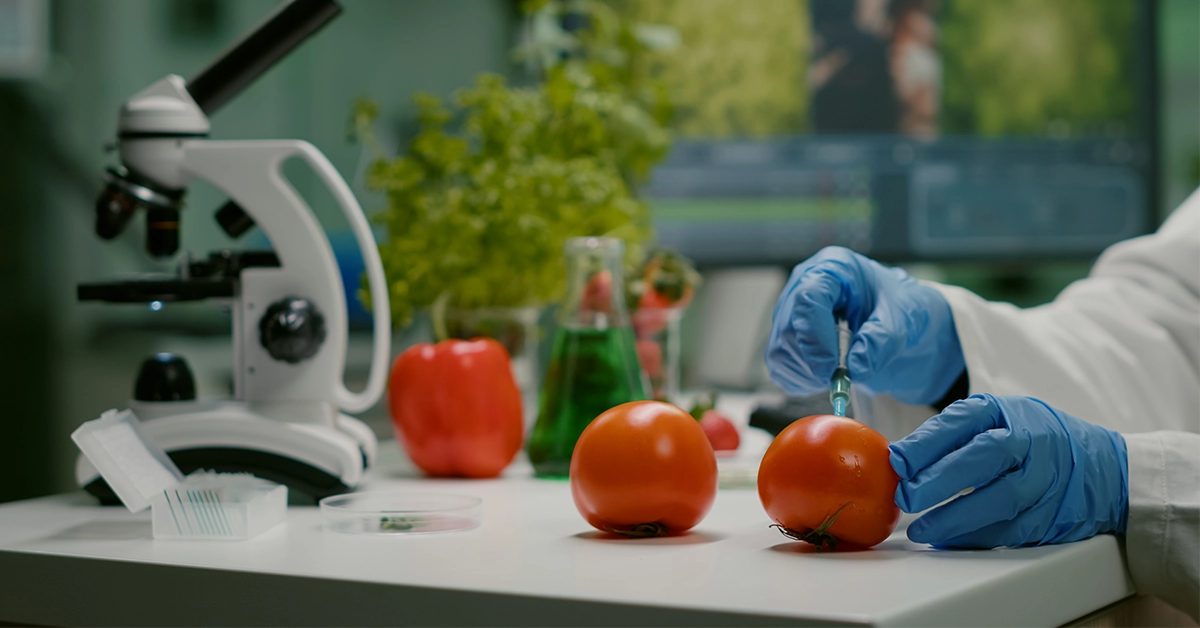
Agreement between the EU Council (i.e. national ministers) and the EU Parliament on the new legal framework for new GMOs (known in Europe as NBTs, or New Breeding Techniques, meaning new genomic techniques, but referred to in Italy as NGTs or, more elegantly, TEAs, or assisted evolution techniques).
On the night of 3 December, after months of negotiations, the Council and Parliament reached a provisional political agreement on the European Commission's proposal on “new” GMOs (NGTs), strongly supported by conventional agricultural organizations and multinational seed companies and equally strongly opposed by the organic movement.
The provisional agreement aims to soften the rules for the category of genetically modified plants NGT1, considered “equivalent” to conventional crops, and represents a serious risk to European food sovereignty and seed autonomy, but also a real distraction from the effective agroecological solutions needed to move agriculture towards sustainability.
The Council officially maintains that the new regulation governing NGTs is intended to improve the competitiveness of the agri-food sector and ensure a level playing field for European operators, while strengthening food security and reducing dependence on imports.
As IFOAM Organics Europe points out, the provisional agreement undermines essential safeguards for the European food system, with serious consequences for farmers, breeders, producers, consumers and the environment.
In summary:
Authorizations
The agreement provides for a simplified procedure for the authorization of NGT1 plants (obtained by targeted mutagenesis and cisgenesis), which will be considered equivalent to conventional plants and should be exempt from current GMO regulations.
For the NGT2 category, with more significant genome modifications, GMO regulations, including product labelling, would remain in force.
Traceability, labelling and coexistence:
Only seeds will be labelled; there will be no labelling for derived products, either B2B or B2C.
In the event of accidental and technically unavoidable presence of NGT material, this will not constitute a case of non-compliance.
Member States should be able to ban the cultivation of NGT2 plants on their territory, as well as adopt any appropriate coexistence measures.
Based on a report on the economic and administrative impact on organic farming over a period of 5-7 years, the Commission may submit a specific legislative proposal.
Patents
A code of conduct is to be drawn up within a year and a half and reviewed after five years: the Commission shall draw up the code with the support of interested parties (patent holders, voluntary licensing platforms, breeders, farmers, civil society organizations, etc.) to detail the commitments of patent holders to provide clear and accessible information to the public on patents, to grant licenses on fair and reasonable terms, and to refrain from enforcing patent rights against farmers in cases of unintentional and minor presence of patented genetic material. The code should also promote cost-effective participation for SMEs, standard licensing agreements and fair dispute resolution mechanisms.
The Commission will monitor the functioning of the code of conduct and, if the assessment reveals serious or frequent violations of the provisions, it should take appropriate measures, including the possible proposal of legislative measures.
Miscellaneous
New GMOs that are herbicide-resistant or harmful due to the toxins they produce will always be classified as NGT2, and therefore not completely deregulated.
There will be further technical meetings to fill in the gaps by mid-January, followed by review by lawyer-linguists, then a vote in the ENVI (Environment) Committee for the adoption of the agreement (at the earliest at the end of January), then a vote in plenary where amendments may be tabled (but are difficult to pass).
Initial assessments
The agreement lacks effective patent protections for NGT crops (despite the European Parliament having approved a strong position on the subject by a large majority in 2024) and does not guarantee full traceability throughout the supply chain: without these guarantees, Europe risks compromising freedom of choice, transparency for consumers and the future of innovative agriculture and livestock farming.
Although European legislation is full of references to consumers' right to information about the food they consume, the proposal aims to prevent them from knowing how their food is produced: NGT1 seeds will be labelled as such, but it will not be necessary to inform consumers of this characteristic on the labels of food products for sale.
For further information: EUROPA.TODAY.IT
About Cotecna
For over 50 years, we have been supporting agriculture, food and pharma, minerals and metals, and consumer products supply chains all over the world. We provide testing, inspection, and certification services to help our clients navigate evolving regulations, ensure product compliance, and support their sustainability journey.
About Suolo e Salute
Suolo e Salute is one of Europe's leading inspection and certification bodies for organic farming, quality agri-food products, and environmental standards. It certifies nearly 29,000 operators under several certification schemes, including organic farming, GlobalG.A.P., integrated farming, and animal welfare.
In Italy, Suolo e Salute is the leading certification body for organic production, with more than 24,500 certified operators and over 710,000 hectares under inspection. The company has more than 150 employees and a network of over 300 auditors. In 2025, Suolo e Salute became part of the Cotecna Group and is now able to offer certification services worldwide. For more information, please visit www.suoloesalute.it.
Latest News

30.10.2026
Beyond Carbon Footprint: A Practical Guide to More Sustainable Businesses
Explore how GHG inventories, emissions verification, Life Cycle Assessment, energy management and ESG assurance support credible business sustainability.
30.10.2026
Strengthening Cotecna's Global Metals & Minerals Network Through Leadership Engagement
Mark Houchin's global visits highlight Cotecna's commitment to technical excellence and operational alignment, while focussing on strong customer partnerships worldwide.