



Exporting Auto Spare Parts from Kenya to Gabon: A Guide to PROGEC Compliance

Gabon presents a compelling growth opportunity for Kenyan exporters of auto spare parts, driven by its expanding vehicle fleet, limited local manufacturing, and increasing demand for quality aftermarket components. The country’s reliance on imports for automotive maintenance makes it a prime destination for Kenyan businesses, especially given Kenya’s well-established automotive sector and regional trade networks.
However, to access this promising market, exporters must comply with Gabon’s PROGEC program, overseen by the Gabonese Standardization Agency (AGANOR). This program enforces strict conformity requirements for regulated products, including auto spare parts classified under HS chapters 84, 85, and 94. Non-compliance can result in customs delays, shipment rejection, or financial penalties making regulatory adherence essential for successful market entry.
Key Considerations for Exporting Auto Spare Parts to Gabon
- Understand the PROGEC Regulation: Products under HS chapters 84 (mechanical appliances), 85 (electrical equipment), and 94 (furniture and lighting) require a Certificate of Conformity (COC) if the FOB value exceeds 3000 Euros, as per Decree 1407-21.
- Identify Regulated HS Codes: Confirm your products fall within the regulated categories. Voluntary COC may apply to non-listed codes, while food items are exempt.
- Prepare Documentation Early: Gather product specifications, test reports, and invoices well before shipment to streamline the conformity assessment.
- Schedule Pre-Shipment Inspections: Inspections verify that product labeling, packaging, and specifications meet AGANOR standards prior to export.
- Secure the Certificate of Conformity (COC): The COC is mandatory for customs clearance and confirms that the product complies with Gabonese regulations.
PROGEC Regulatory Requirements
1. Supplier’s Declaration of Conformity
Exporters must submit a declaration confirming that their products meet AGANOR standards. This includes:
- Supplier details (name, address, contact information)
- Product information (type, description, HS code)
- Reference to applicable standards
2. Conformity Assessment and Certification
A PROGEC-approved body like Cotecna must conduct the conformity assessment, which includes:
- Review of the Supplier’s Declaration
- Submission of technical documentation
- Product testing to verify compliance
3. Product Standards and Testing
Products must meet Gabonese specifications for safety, durability, and performance. Customs authorities may randomly sample shipments for testing.
4. Labeling and Documentation
Products must be labeled clearly, and documentation must include:
- Supplier’s Declaration of Conformity
- Test reports and product specifications
- Certificate of Value (VOC), supporting customs valuation
5. Harmonized System (HS) Codes
Relevant codes for auto spare parts include:
- HS 84: Mechanical appliances
- HS 85: Electrical/electronic components
- HS 94: Lighting and furniture used in vehicles
Cotecna’s Role in PROGEC Compliance
Obtaining the mandatory COC proves that auto spare parts meet Gabon’s product quality and safety standards. Cotecna is authorized by AGANOR to conduct conformity assessments and issue COCs under the PROGEC program.
Cotecna supports Kenyan exporters by facilitating:
- Pre-export inspections
- Technical documentation review
- Certification issuance through AGANOR-approved channels
For more information on exporting to Gabon under the PROGEC program, you can download our Exporter Guide or contact us for assistance.
About Cotecna
For over 50 years, we have been supporting agriculture, food and pharma, minerals and metals, and consumer products supply chains all over the world. We provide testing, inspection, and certification services to help our clients navigate evolving regulations, ensure product compliance, and support their sustainability journey.
Latest News

30.10.2026
Beyond Carbon Footprint: A Practical Guide to More Sustainable Businesses
Explore how GHG inventories, emissions verification, Life Cycle Assessment, energy management and ESG assurance support credible business sustainability.
30.10.2026
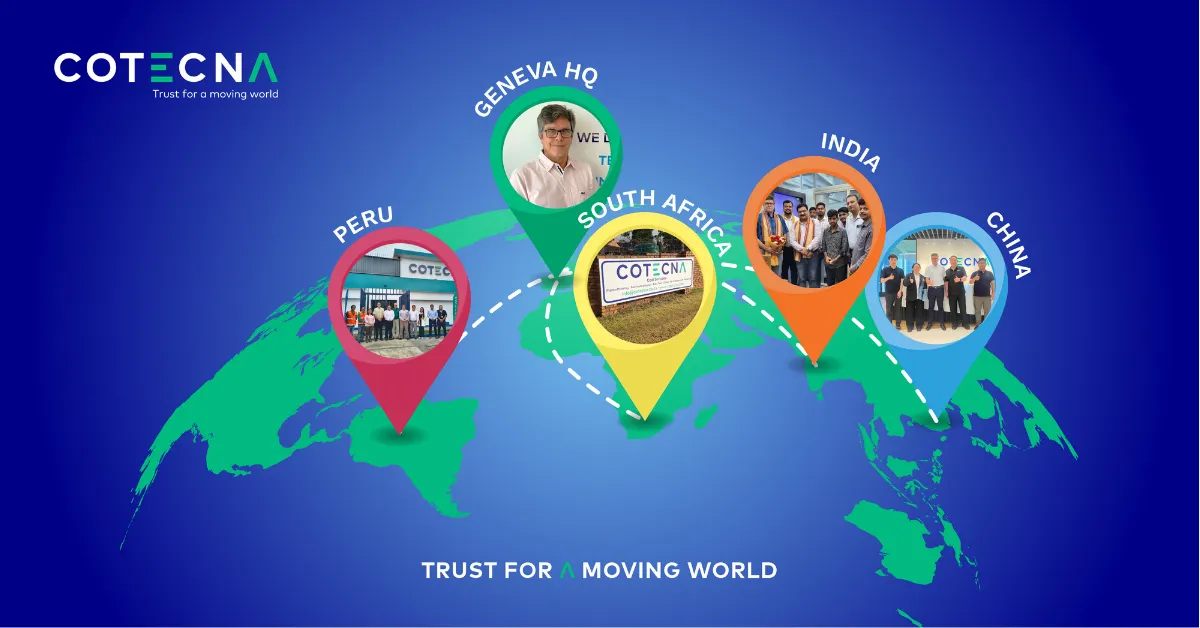
Strengthening Cotecna's Global Metals & Minerals Network Through Leadership Engagement
Mark Houchin's global visits highlight Cotecna's commitment to technical excellence and operational alignment, while focussing on strong customer partnerships worldwide.