



Tea Products Testing for Polyphenolic and Other Compounds by Neotron
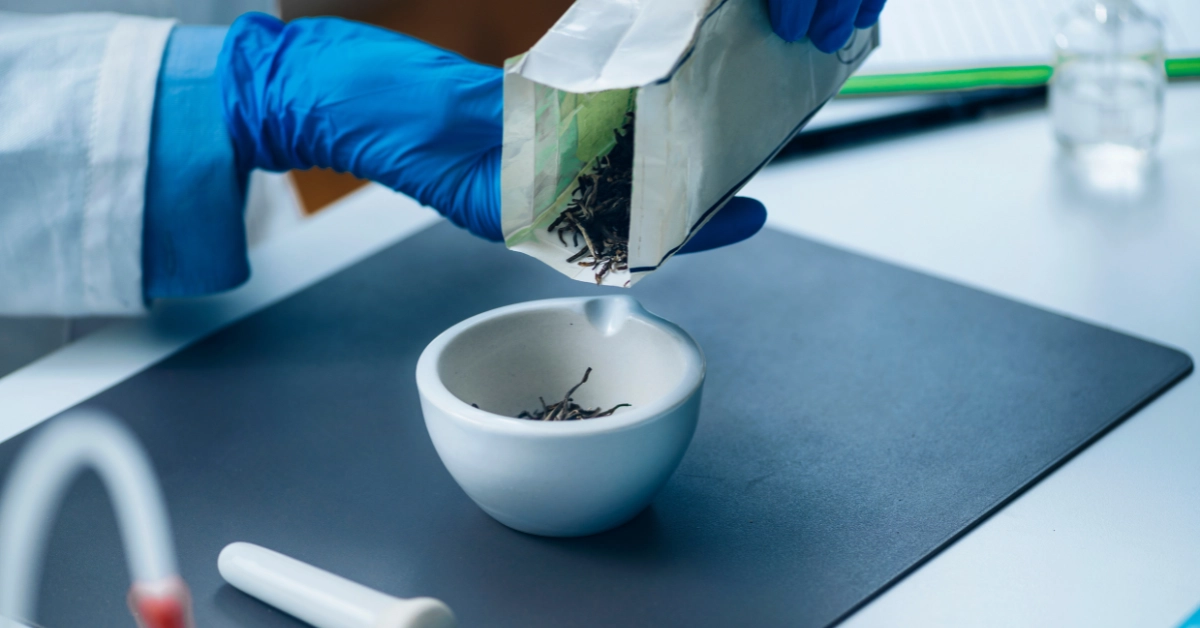
Tea is grown and manufactured in many countries of the world, and it is consumed in many more. Statista valued the global tea market at US$ 122.2 billion in 2022. Therefore, the analytical control of tea and tea products is necessary to ensure the product safety and composition.
For instance, tea contains polyphenolic a compound believed to boost digestion and brain health and protect against certain chronic diseases and cancers. Polyphenolic extracts in solid form mainly consisting of catechins, obtained from fresh tea leaves of the species Camellia sinensis (Linnaeus) O. Kuntze or tea products (green tea, etc.), by acceptable processes of extraction, separation, purification, concentration and drying.
As a natural antioxidant, tea polyphenols account for approximately 20% of the dry matter of tea leaves, widely used in various fields, including medicine, food and cosmetics.
Tea Product Testing and Analysis
In order to ensure the safety of Tea and Tea products, Neotron, part of the Cotecna Group, performs a comprehensive series of analysis, in accordance with the limits of quantification set by current regulations. The current regulation, for example, sets limits of quantification for pesticides screening (396/2005 as amended) and other contaminants determination (915/2023) on Tea and Tea Products.
Neotron is able to perform the following analysis and tests for tea products:
- Pesticide Residues
- Dioxins, PCBs, PAHs & Furans
- Physical & General Analysis
- Nutritional Analysis & Labelling
- Fatty acid profile & Trans fatty acids
- Minerals (calcium, magnesium, sodium, zinc, etc.)
- Mycotoxins (total aflatoxin, aflatoxin B1, aflatoxin B2, etc.)
- Heavy metal residues (lead, mercury, arsenic, copper, cadmium, etc.)
- Additives (benzoates, calcium lactate, diacetyltartaric and fatty acid esters of glycerol, fumaric acid, monosodium L- glutamate, potassium dihydrogen citrate, etc.)
- Antibiotics Residues
- Shelf life Testing
- Microbiological parameters (total plate count, total coliform count, yeast and mould count, salmonella and shigella, E. coli, etc.)
- Allergens
- GMO Testing
- ETO Testing
- MCPDs
- Sensory Evaluation
Regulatory Compliance
In addition, Neotron can support clients in the determination of active components in tea and tea products based on an internal method following the requirements set by ISO 5642:2024 or other specific assays.
Parameter
- Total Polyphenols
- Total Catechins
- obtained as sum of the following single Cathechins:
- Gallic Acid, Catechin, Catechin Gallate, Epicatechin, Epi-catechin Gallate, Epi-gallo-catechin, Epigallocatechin-3-gallate, Gallo-catechin, Gallo-catechin Gallate)
- Caffeine
- Total Ash
- Moisture Content
- Theine
- Theanine
The development of International Standards can promote international trade, and further motivate the healthy and sustainable development of the worldwide tea industry.
To learn more about tea and tea product testing or to request a consultation, please contact us.
Latest News

30.10.2026
Beyond Carbon Footprint: A Practical Guide to More Sustainable Businesses
Explore how GHG inventories, emissions verification, Life Cycle Assessment, energy management and ESG assurance support credible business sustainability.
30.10.2026
Strengthening Cotecna's Global Metals & Minerals Network Through Leadership Engagement
Mark Houchin's global visits highlight Cotecna's commitment to technical excellence and operational alignment, while focussing on strong customer partnerships worldwide.