



The European Parliament: More Streamlined Procedures for Biocontrol Technical Means
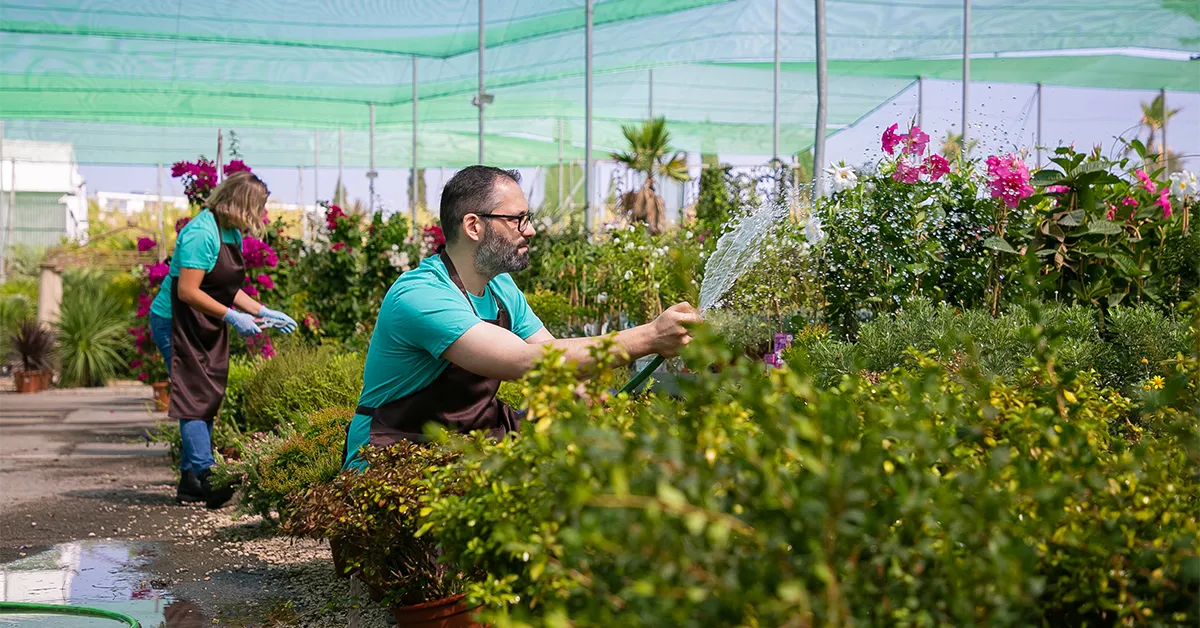
The vast majority of MEPs are calling for faster procedures for the authorisation of biocontrol technical means, investments and funding
On 5 November, the European Parliament's Environment, Climate Change and Food Safety and Agriculture and Rural Development Committees adopted an own-initiative report aimed at speeding up the registration of biological control agents. The text was adopted by 97 votes to 8, with 2 abstentions, and will be put to the vote in plenary between 24 and 27 November.
According to MEPs, the use of biocontrol solutions can help reduce dependence on traditional plant protection products. To facilitate their uptake, the report proposes a targeted revision of Regulation (EC) No 1107/2009 on the placing of plant protection products on the market, introducing a clear legal definition of biological control agents and faster approval procedures.
MEPs also urge Member States to make more frequent and efficient use of the mutual recognition procedure for these products. However, speeding up the evaluation and authorisation processes must not slow down those for conventional plant protection products, and biological agents must, of course, still be subject to rigorous scientific evaluation.
The Commission is working to update the regulation in line with the European Court ruling, but the opportunity should also be taken to make other adjustments.
It all started with a ruling by the European Court of Justice, which found unequal treatment between European and non-EU companies (except for baby food, in the EU it is not possible to add mineral salts and vitamins to organic products, while this is permitted in the US, with which there is a relationship of equivalence: US products with additives could display the organic logo, unlike those made in Europe, and the imbalance had to be resolved).
Having to amend the regulation to comply with the ruling, the European Commission also decided to review other points, with the aim of simplifying certain aspects that had proved problematic.
Industry organisations hope that this is not just a simple legal formality and that the opportunity can be taken to make other technical adjustments on issues that burden operators and hinder the growth of the sector.
One of the most sensitive issues is the introduction of a list of products for hygiene and cleaning of disinfectant systems: according to the basic regulation, a positive list should be issued (containing authorised products, of which there are thousands in the 27 EU countries), whereas a negative list (prohibiting substances with the greatest impact, marked with specific risk indications) would certainly be more manageable.
Another objective is to preserve the principle of “equivalence”, which is fundamental to safeguarding the flow of international trade: if the circulation of US products is hindered in any way (due to limited and clearly defined minor differences), a similar attitude can be expected from the US (to which Italy alone exports organic products worth around £300 million, excluding pasta, cheese and cured meats).
There is also a need to simplify the certification of producer groups (mainly in developing countries in the field of fair trade for bananas, cocoa, coffee and cane sugar), which Regulation 848/2018 has burdened with greater bureaucracy and higher costs, which are discouraging them.
It is also appropriate to standardise the methods for managing the presence of unauthorised substance residues: this does not mean lowering standards, but rather standardising them, preventing each country from dealing with the issue in its own way, which also disrupts the market.
It is not a question of rewriting rules that have been defined with such effort, but of learning from experience and improving their implementation.
Stay up to date at https://www.facebook.com/OrganicsEurope
About Cotecna
For over 50 years, we have been supporting agriculture, food and pharma, minerals and metals, and consumer products supply chains all over the world. We provide testing, inspection, and certification services to help our clients navigate evolving regulations, ensure product compliance, and support their sustainability journey.
About Suolo e Salute
Suolo e Salute is one of Europe's leading inspection and certification bodies for organic farming, quality agri-food products, and environmental standards. It certifies nearly 29,000 operators under several certification schemes, including organic farming, GlobalG.A.P., integrated farming, and animal welfare.
In Italy, Suolo e Salute is the leading certification body for organic production, with more than 24,500 certified operators and over 710,000 hectares under inspection. The company has more than 150 employees and a network of over 300 auditors. In 2025, Suolo e Salute became part of the Cotecna Group and is now able to offer certification services worldwide. For more information, please visit www.suoloesalute.it.
Latest News

30.10.2026
Beyond Carbon Footprint: A Practical Guide to More Sustainable Businesses
Explore how GHG inventories, emissions verification, Life Cycle Assessment, energy management and ESG assurance support credible business sustainability.
30.10.2026
Strengthening Cotecna's Global Metals & Minerals Network Through Leadership Engagement
Mark Houchin's global visits highlight Cotecna's commitment to technical excellence and operational alignment, while focussing on strong customer partnerships worldwide.