



The Importance of Phytosanitary Diagnosis in the International Fruit Market
The global fruit market is dynamic and diverse, driven by growing consumer demand for fresh, healthy products that are available all year round. To meet this demand, there are several challenges for the production sector, ranging from production itself to distribution logistics.
Fruit production in Brazil is highly diverse and varies by region. The Northeast is renowned for its tropical fruits, particularly with the São Francisco Valley serving as a key center for irrigated cultivation. In contrast, the Southeast leads the nation in citrus production, while the South is the primary producer of apples, peaches, and grapes. Together, these regions represent the backbone of Brazil's fruit industry, catering to both domestic consumers and international markets.
In the domestic market, the fruit industry generates billions of reais a year and are fundamental to Brazil's agricultural economy. In 2022, the Supply Centers recorded a turnover of more than 60 billion reais in fruit and vegetables. In the same year, the volume of fresh fruit exports in Brazil was 1.24 million tons, resulting in revenues of 1.21 million dollars.
The main destinations for Brazilian fruit are the European Union and the United States, followed by the United Kingdom, Argentina and Canada. Almost half of exports are destined for the European Union, which in 2021 accounted for 48% of the total volume exported by the country. Argentina, the main destination in Mercosur, receives only 4% of the total volume of fresh fruit exported by Brazil.
The challenge of logistics in international fruit trade brings with it complex issues related to plant health, especially with regard to the transportation of pests and diseases. The flow of production involves the distribution of the product between states and with the phytosanitary barriers of other countries, as well as the need for shipments to comply with the phytosanitary requirements of the entities involved.
When fresh fruit is transported across borders, there is a significant risk of exotic pests hitching a ride with these shipments. Although challenging to quantify, the presence of these pests can cause severe damage to agriculture and the environment, potentially disrupting entire ecosystems and leading to substantial economic losses. To mitigate the risks associated with the inadvertent introduction of pests, stringent control measures are essential, including the intensive application of pesticides. Consequently, the transport of unregulated plant materials poses a serious threat to the food security of both regions and countries.
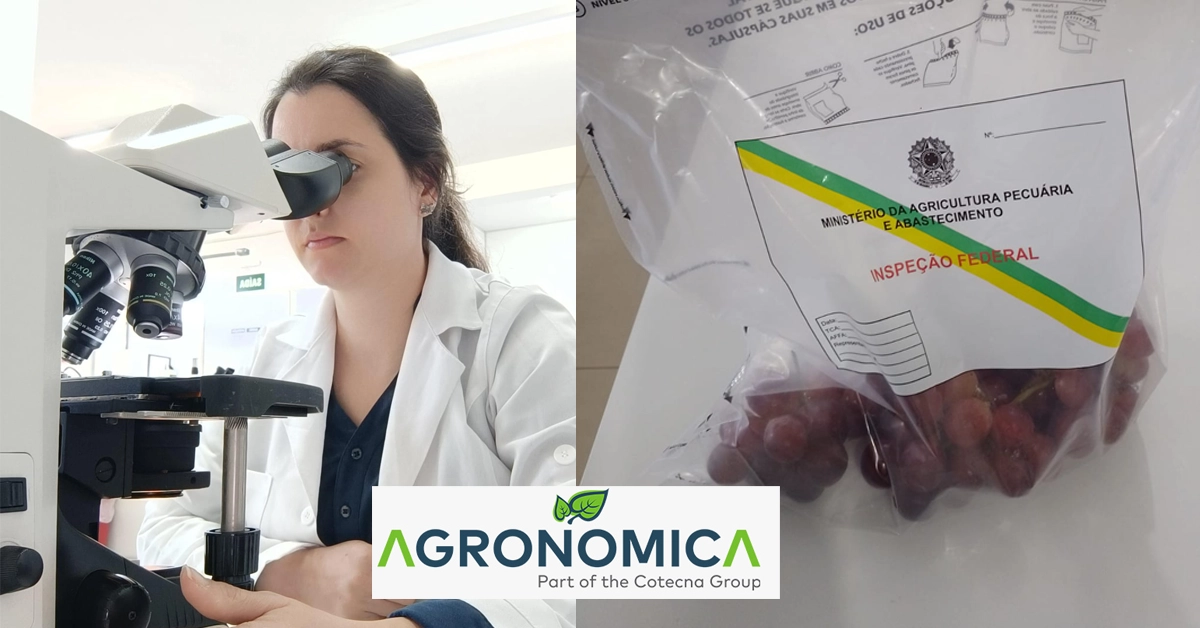
Within this context, the Agronômica Laboratory carries out phytosanitary diagnostics with the aim of detecting quarantine and restricted pests in fresh fruit, both for the domestic and international markets. The laboratory uses advanced pest detection tools, with morphological and molecular techniques that improve the ability to identify pests and pathogens.
According to data from the Agronômica Laboratory, between 2018 and 2023, 11,428 samples of fresh fruit were analyzed, of which 65% were for analysis of export fruit, 31% for imports and 4% of samples from the domestic market. In the export analysis, Argentina, Paraguay and Uruguay account for almost 90% of the samples received and Chile 7%. The aim of these analyses is to detect pests present in Brazil that are exotic in the destination countries. The main fruits analyzed for these destinations are mangoes, grapes, melons, watermelons and sour limes.
For Mercosur, the main pests analyzed are Thrips palmi, the pink hibiscus mealybug Maconellicoccus hirsutus, Lasiothyris lumina and the mite Brevipalpus californicus. Analyses are also required for the presence of the fruit flies Anastrepha grandis and Bactrocera carambolae, depending on the country of destination.
Analyses of sour limes for Chile need to be considered free of mites of the genus Brevipalpus and the fungus Phytophthora palmivora. Apple fruit for India, for example, are inspected for 10 pests, including fungi, bacteria and insects. These analyses help to reduce the unwanted transportation of pests between countries, as their detection prevents the export of all the cargo sampled.
Import analyses are based on normative acts of the Ministry of Agriculture, Livestock and Food Supply (MAPA), as in the list of quarantine pests for Brazil, described in Ordinance No. 617/2022 of July 11, 2022 and Normative Instruction No. 38 of October 1, 2018. The most frequent analyses in the laboratory are of fruit from Chile and Argentina, countries that supply the Brazilian market with stone fruit (Prunus spp.), apples, pears, kiwi, among others. Samples from other countries such as Spain, the United States and Colombia have also been analyzed at the laboratory in recent years.
As a result of this work, the Agronômica Laboratory has on several occasions detected a total of nine species of quarantine pests associated with imported fresh fruit (see Table 1). All pests with the potential to significantly impact fruit production in various regions of the country, highlighting the importance of phytosanitary surveillance and diagnosis.
Table 1 - List of quarantine pests detected by the Agronômica Laboratory in various imported fresh fruits (2018 - 2023).
| Quarantine Pest | Group | Status | Country | Host |
| Amyelois transitella | Insect | Absent | Chile, Argentina | Prunus persica |
| Apomyelois ceratoniae | Insect | Absent | Chile, Argentina | Juglans regia |
| Cydia pomonella | Insect | Absent | Chile, Argentina | Malus spp., Prunus spp., Pyrus communis, Juglans regia. |
| Cydia splendana | Insect | Absent | Portugal, Spain | Castanea spp. |
| Brevipalpus chilensis | Mite | Absent | Chile, Argentina | Actinida deliciosa, Prunus spp., Malus domestica, Vitis vinifera |
| Brevipalpus lewisi | Mite | Absent | Argentina | Vitis vinifera |
| Cenopalpus pulcher | Mite | Absent | Argentina | Pyrus communis |
| Tetranychus pacificus | Mite | Absent | USA | Prunus avium |
| Plum pox virus (PPV) | Virus | Absent | Chile, Argentina | Prunus spp. |
Phytosanitary diagnosis and strict surveillance are essential to prevent the entry of quarantine pests. Accurate diagnosis of quarantine pests is fundamental to keeping trade safe and profitable, benefiting both producers and consumers. Through these analyses, the laboratory is committed to promoting plant health and eliminating threats to contribute to food security and sustainability. Checkout other insightful blogs from Agronômica and see how we can help you grow your business. Learn more about Agronômica's services. Contact us today.