



The True Cost of Workplace Accidents: Why Indirect Costs Can Reach Four Times the Direct Costs

When organisations think about workplace accidents, the focus often falls on the immediate and visible expenses, such as medical treatment, repairs, insurance claims, compensation. These direct costs can be significant. In a recent UK incident involving a worker fatally struck by a reversing vehicle, the direct financial impact was estimated at £2.4 million (around $3 million USD).
Direct costs typically represent only a portion of the true financial impact of Safety Incidents, Indirect costs can be significantly higher. Early work by Herbert William Heinrich, particularly in Industrial Accident Prevention: A scientific Approach (1931), suggested that indirect costs could be on the order of four times direct costs. While subsequent research has shown that this ratio varies considerably depending on industry, incident type and, and costing methodology, Heinrich's 4:1 relationship remains a widely cited benchmark for illustrating the scale of hidden costs.
Once operational disruption, lost productivity, regulatory time, and cultural consequences were accounted for, the indirect costs could exceeded £10 million (approximately $13 million USD) more than four times the direct losses for a fatality.
This is the hidden economic reality of serious safety failures.
Direct Costs: The Visible Financial Hit (£2.4M / $3M)
Direct costs are easier to measure and typically include:
- Emergency response
- Medical and coronial procedures
- Legal representation and compensation
- Damage to vehicles and equipment
- Immediate operational stoppage
- Direct insurance costs and penalty or breach of contract damages
At £2.4 million ($3M USD), these represent a substantial financial blow but still only the starting point.
Indirect Costs: The Hidden Impact (£10M+ / $13M+ USD)
Indirect costs are where the true scale emerges. In this example they could reach over £10 million ($13 million USD), given the 4:1 ratio, driven by:
- Lost Productivity; Investigations, interviews, and disrupted shifts slowed operations for weeks.
- Workforce Trauma and Morale; Colleagues experienced shock, grief, and reduced engagement. Absenteeism increased.
- Management Time; Senior leaders diverted hours, days, and weeks into regulatory discussions, legal meetings, analysis, and corrective actions.
- Training, Recruitment & Competency Gaps; Replacing a skilled worker brings onboarding time, supervision demands, and reduced efficiency.
- Regulatory Scrutiny; Ongoing inspections and enforcement requirements increased operational costs.
- Insurance Premium Increases; A long-term rise in premiums adds millions over following years.
- Reputational Damage; Clients and partners question safety maturity; contract opportunities are lost.
- Facility shutdown; Working locations may be closed while investigations take place and then not reopened until new controls are implemented.
None of these costs generate a simple invoice, yet they compound into eight‑figure impacts.
Prevention: The Most Profitable Investment in Any Organisation
Because indirect costs multiply the consequences of every accident, prevention is not an expense, it is a strategic investment with high return.
Effective organisations focus on:
- Strong and visible Safety leadership
- Control of high risks
- Daily reinforcement of safe behaviours
- Robust monitoring of controls
- Empowered workers who challenge unsafe acts
- Training that builds real competence
- A culture where safety is everyone’s responsibility
Every avoided accident protects lives and shields organisations from huge, often hidden, financial losses.
If Safety Incidents teach us anything, it’s that safety cannot wait.
I’m asking Safety Leaders, supervisors, and safety professionals everywhere:
- Re‑evaluate your controls today, not after the next incident.
- Walk your sites and look at how work is actually being done.
- Challenge unsafe behaviours immediately, no matter how routine they appear.
- Invest in the culture, not just the paperwork.
- Have the difficult conversations now, because the cost of not acting is far higher.
The next accident is preventable.
What action will you take today to make sure it doesn’t happen on your site?
Written by Dean Tillbrook, Cotecna Global HSE Officer
About Cotecna
For over 50 years, we have been supporting agriculture, food and pharma, minerals and metals, and consumer products supply chains all over the world. We provide testing, inspection, and certification services to help our clients navigate evolving regulations, ensure product compliance, and support their sustainability journey.
Latest News

30.10.2026
Beyond Carbon Footprint: A Practical Guide to More Sustainable Businesses
Explore how GHG inventories, emissions verification, Life Cycle Assessment, energy management and ESG assurance support credible business sustainability.
30.10.2026
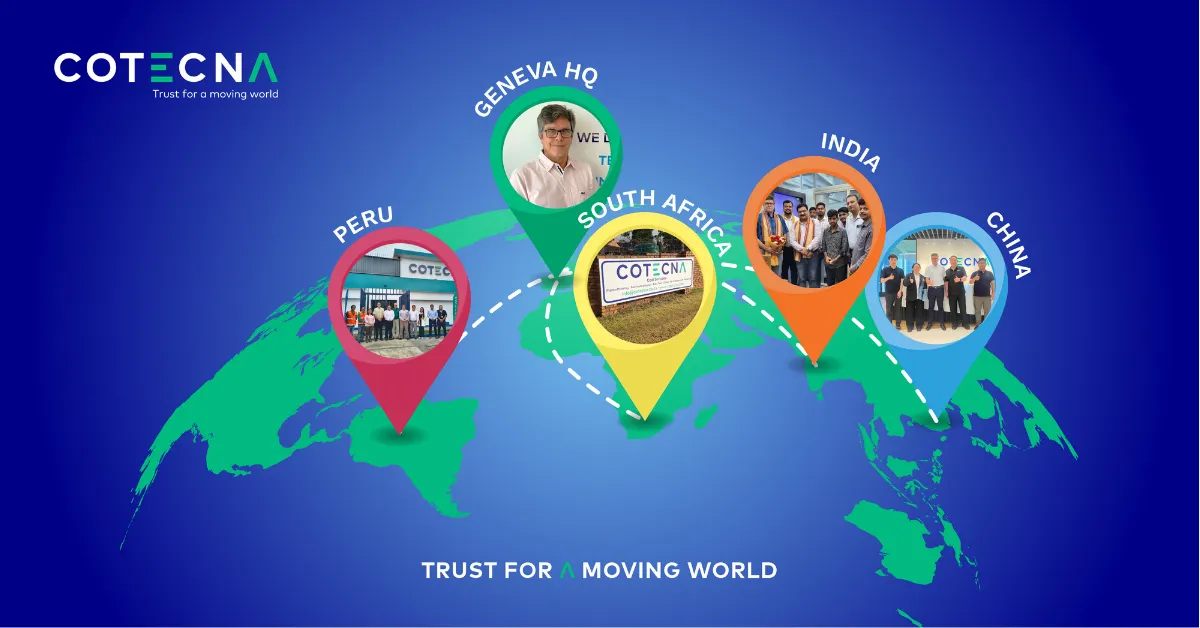
Strengthening Cotecna's Global Metals & Minerals Network Through Leadership Engagement
Mark Houchin's global visits highlight Cotecna's commitment to technical excellence and operational alignment, while focussing on strong customer partnerships worldwide.